
Transparency: this article contains affiliate links. If you sign up through them, Finanzas en Holanda may earn a commission at no extra cost to you. We only recommend products we would use with our own money. More information.
Can you invest in the stock market with just 10 euros? Yes. The barrier to investing is no longer money — it’s knowing where to start. Today, there are regulated European brokers that allow you to buy ETFs with very small amounts, some even without charging a commission.
In this article, I’ll explain what you need, which are the best brokers available in the Netherlands in 2026, which ETFs to look at, and what strategy truly makes sense when you’re starting with little money.
What you need to get started
- A Dutch bank account — necessary to make the initial transfer to the broker.
- Your BSN — all regulated brokers in Europe request it to verify your identity.
- An account with a regulated broker — the process is done online in 10-15 minutes.
- Decide what to buy — to start, a global ETF is the simplest and most diversified option.
The real problem with investing only 10 euros
Technically, you can invest 10 euros. The problem is the fees. With a broker like DeGiro, each buy order costs approximately €1. If you invest €10, you’re already starting at -10% — and that’s before the market moves.
The solution is not to avoid investing: it’s to invest more per transaction. What does make sense with little money is to open the account now with €10 to familiarise yourself with the platform, and then automate a monthly contribution of €50 or €100. This way, the commission represents 1-2% of the total invested, which is a reasonable cost.
Brokers available in the Netherlands in 2026
These are the most used brokers by residents in the Netherlands for investing in ETFs with small amounts:
| Broker | ETF Commission | Fractional Shares | Regulation |
|---|---|---|---|
| DeGiro | ~€1 per order | No | AFM (Netherlands) |
| Trading 212 | €0 (free) | Yes | CySEC (Cyprus) |
| BUX Zero | €0 on selected ETFs | No | AFM (Netherlands) |
| Trade Republic | €1 per order (free ETFs with savings plan) | Yes | BaFin (Germany) |
DeGiro remains the most popular broker among residents in the Netherlands. It is headquartered in Amsterdam, regulated by the AFM, and offers access to major European and American stock exchanges. The €1 per transaction cost is low, but it matters when you invest small amounts.
Trading 212 is the best option if you want to start literally with €10 or less, because it offers fractional shares — you can buy a fraction of any ETF regardless of its price — and charges no commission. For EU clients (including the Netherlands), it is regulated by the CySEC Cyprus, with investor protection up to €20,000 through the Cypriot fund (ICF).
BUX Zero is a Dutch broker regulated by the AFM that offers a catalogue of selected ETFs without commission. More limited in offerings than DeGiro, but valid for getting started.
Trade Republic is the broker that has grown the most in Europe in recent years. It is based in Berlin, regulated by the German BaFin, and offers fractional shares from €1, automatic savings plans in ETFs with no management fees, and an interest-bearing account. It is especially popular among those who want to automate their monthly investment simply. You can open an account using the following link and get a welcome bonus: → Open an account with Trade Republic
If you want to see each broker in detail, we have complete guides on how to invest with Trade Republic and how to buy on DEGIRO step-by-step.
3 ETFs to start with (under €20 per share)
The price per share varies constantly, but these three ETFs usually have a low entry price and are good options for an initial portfolio:
1. Amundi MSCI World UCITS ETF — the entire developed world
ISIN: LU1681043599. It replicates the MSCI World index, which includes over 1,500 companies from 23 developed countries (USA, Europe, Japan, etc.). It is one of the most widely used ETFs in Europe by passive investors. Its price per share makes it accessible for starting with little capital.
2. iShares Core MSCI Emerging Markets IMI — emerging markets
ISIN: IE00BKM4GZ66. Exposure to over 3,300 companies from emerging markets such as China, India, Brazil, and Taiwan. More volatile than the MSCI World, but it provides geographical diversification that the developed world does not cover. A good complement to a developed markets ETF.
3. iShares Automation & Robotics UCITS ETF — Industry 4.0
ISIN: IE00BYWZ0333. A thematic ETF focused on automation, robotics, and artificial intelligence. It contains companies like NVIDIA, Rockwell Automation, and Keyence. More concentrated and volatile than a global index, but interesting as a complement if you believe in the long-term growth of the sector.
If you prefer the simplest and already consolidated option — and you don’t mind a higher price per share — the VWCE (Vanguard FTSE All-World, ISIN IE00B3RBWM25) remains the benchmark in the Netherlands for investors who want a single ETF with exposure to the entire world (developed + emerging markets).
The strategy that works with little money: the maandelijkse inleg
Dutch investors have a concept for this: the maandelijkse inleg (monthly contribution). Instead of trying to guess when is the best time to enter the market, you invest the same amount every month — say €50 or €100 — regardless of whether the stock market is high or low.
This strategy, internationally known as dollar-cost averaging, has two practical advantages for beginners:
- It eliminates the paralysis of “Do I enter now or wait?”
- It turns saving into an automatic habit, not a monthly decision.
DeGiro and Trading 212 allow you to set up automatic recurring orders. Once configured, the broker buys for you every month without you having to do anything.
How to track your investments: Getquin
If you have investments in more than one place — an ETF on DeGiro, savings on Raisin, perhaps something in crypto — it can be difficult to get an overview of your total assets. Getquin is an app that connects to your investment accounts and shows you everything in one place: returns, diversification, dividends, and historical performance.
Prefer fixed returns without volatility? Mintos
If the idea of watching your investment fluctuate week by week doesn’t convince you, another option for small capital is Mintos, a P2P lending platform based in Latvia and regulated by the FCMC. You can invest from €10 in loans with returns around 8-12% annually, with automatic reinvestment options.
It’s not equivalent to an ETF — the risk is different — but it’s a valid alternative if you’re looking for returns without direct exposure to the stock market. You can read more about alternative platforms in this article.
Frequently Asked Questions
Do I have to declare my investments in the Netherlands?
Yes. In the Netherlands, investment assets (shares, ETFs, cryptocurrencies) are taxed in Box 3 of the Dutch income tax. The tax authorities (Belastingdienst) apply a fictitious return on the value of your assets as of 1 January. If the total of your savings and investments exceeds the tax-free threshold (heffingsvrij vermogen), you pay tax on this calculated return, not on actual gains.
Is it safe to invest with DeGiro from the Netherlands?
DeGiro is regulated by the AFM and the DNB (Dutch Central Bank). Your account is protected by the Dutch investor protection scheme up to €20,000 in case of the broker’s bankruptcy. However, losses due to market movements are not covered — that is the normal risk of investing.
What is an ETF and why is it better than buying individual shares?
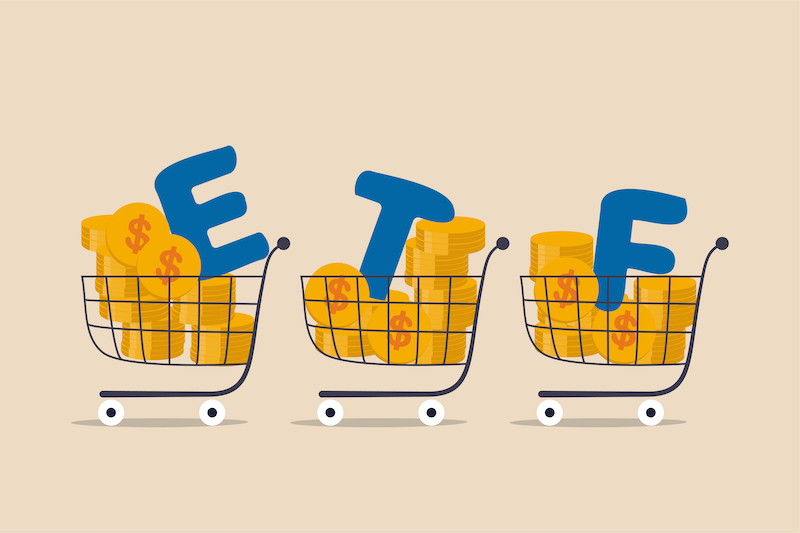
An ETF (Exchange Traded Fund) is a fund that trades on a stock exchange and replicates the performance of an index, sector, or market. Instead of betting on a single company, with an ETF you buy a small stake in hundreds or thousands of companies at once. This reduces risk: if one company goes bankrupt, the impact on your portfolio is minimal.
Can I invest in the stock market as a foreign resident in the Netherlands?
Yes, without restrictions. You need a BSN, a Dutch bank account, and to complete the broker’s identity verification process (which is done online with your passport or ID card). You don’t need to be a citizen or have a permanent residence permit.
How much money do I really need to start investing?
With €10, you can open an account and make your first purchase. But for the commission cost to be reasonable (less than 2% of the total), you need to invest at least €50 per order with brokers like DeGiro. If you use Trading 212 or BUX Zero — which charge no commission — the real minimum is the cost of the ETF share you choose.
If you want to understand the tax framework before starting, we have an article on the tax system in the Netherlands. And if you prefer to start with savings before investing in the stock market, you can see which banks offer the best interest rates in the Netherlands right now.
Related Investment Guides
- Investing in the stock market with Trade Republic — the broker step-by-step.
- How to buy on DEGIRO step-by-step — the classic Dutch alternative.
- Investment account for beginners — starting with Brand New Day and index funds.
- Investment funds, MONOS, and ETFs — what they are and which to choose.
- How to invest in bonds — fixed income to balance your portfolio.
- Investment risks — what you should know before starting.
- Investment account for children — investing for your children’s future.
- Frequently asked questions about investing in the Netherlands (2026) — all common queries.
Do you have questions about how to start — which broker to choose or which ETF to buy first? Leave them in the comments.